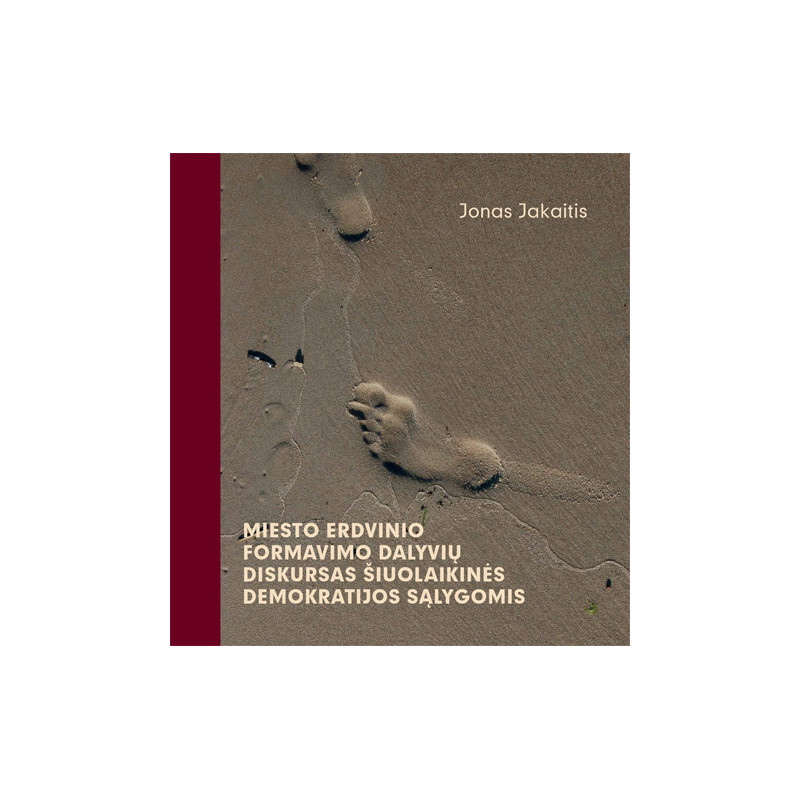
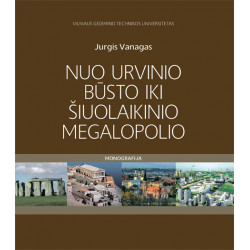
Research on society as a participant in city spatial planning and production of this monograph have been mainuly determined by a political, economic, juridical, social, psychological and ecological indetermination of choosing correct methods for developing city architecture in Lithuania and a small quantity of research into the interactions of the above introduced factors. Twenty years ago, Lithuania regained independence, and therefore the role, methodology and discourse as well as participation in city spatial planning method of private and public subjects varied. Plenty of things have changed in Lithuanian architecture. A newly established or current urban environment improved through democratic self-governed communities by developing social and cultural opportunities in cities, educating territorial communities and encouraging the participation of society, which is inseparable from the city spatial planning policy created based on the principles of democracy.
Electronic version of the book:
DOI: https://doi.org/10.3846/2128-M