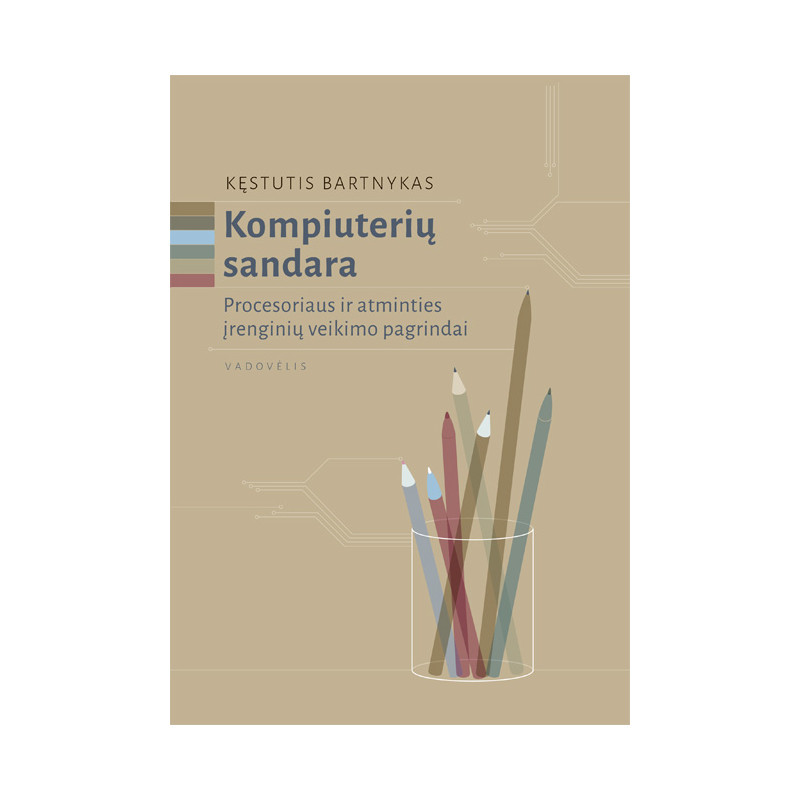
The aim of this book is to explain general principles and terms that are used to design digital technologies and digital devices, and to learn to use them while solving practical problems. This book discusses mostly basic parts of digital computers and basic principles of how they interacts to each other. The topics covered in this book are: numbering systems and codes, attributes instructions set, basic principles of how processor and memory devices work. Generic principles and terms are explained by the examples that are the essence of this book.
The explanation of why covered subjects were created is given, also their advantages and disadvantages and areas of application are named. The textbook intends to develop critical thinking. The text focuses on substance, and discards superfluous talk.
Electronic version of the book:
Data sheet
Reference: 918288
Juozas Raulynaitis Study book (in Lithuanian)
Reference: 915698
Stanislovas Štaras Study book (in Lithuanian)
Reference: 31340
Antanas Savickas Textbook (in Lithuanian)
Reference: 918104
Dalius Seliuta Study book (in Lithuanian)
Reference: 917258
Zita Savickienė Guidelines for laboratory works (in Lithuanian)
Reference: 915591
Algirdas Seilius, Andrejus Geižutis Practical assignments and methodical instructions (in Lithuanian)
Reference: 918105
Laimis Laurinavičius Instructions for Laboratory Methods (in Lithuanian)
Reference: 917665
Rokas Kvedaras, Vygaudas Kvedaras Study book (in Lithuanian)
Reference: 917985
Algimantas Juozas Poška, Dainius Udris Study book (in Lithuanian)
Reference: 32342
Romanas Martavičius, Andrius Katkevičius, Darius Plonis Textbook
Reference: 32082
Romanas Martavičius, Darius Plonis Textbook
Reference: 918524
Gediminas Gražulevičius Study book (in Lithuanian)
Reference: 917644
Petras Audzijonis, Romualdas Baušys Study book (in Lithuanian)
Reference: 917058
Antanas Gurskas Study book (in Lithuanian)